Miles from the Yard: Life After the Last Merchant Depot Closed in Rural Norfolk
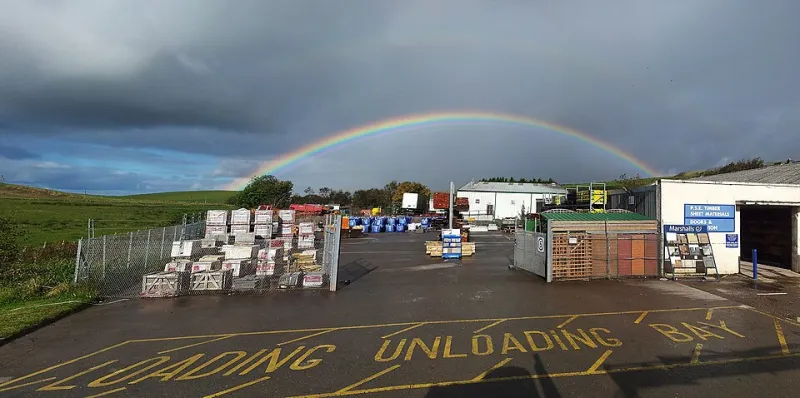
Photo: Steve Partridge , CC BY-SA 2.0, via Wikimedia Commons
The shutters came down at the Fakenham Road depot for the last time on a Friday in late February. By the following Monday, the first of the county's bricklayers was loading up at 5.30am for a round trip that now begins in Norwich — a journey that, until recently, took him twelve minutes.
The closure of a single rural builders' merchant rarely makes the news. But in a county like Norfolk, where villages sit strung out along single-carriageway roads and the trade depends on a handful of depots, one shuttered yard can redraw the working day for an entire district. Over the past month, ProBuilder Contractors Network has spoken to builders, drivers and a small developer across a dozen live sites to understand what happens when the local branch disappears.
The Twelve-Mile Problem
The arithmetic is unforgiving. A merchant that once served sites in Dereham, Foulsham and the surrounding hamlets has pushed the nearest full-stock branch to the outskirts of Norwich or, for those heading the other way, King's Lynn. For a one-van firm collecting a morning order, that is an extra fifty to eighty minutes of driving before a single block is laid.
"It's not just the diesel," says a plasterer who works the mid-Norfolk circuit. "It's the hour of my life. If I'm on the road at half six, I'm not setting up until eight. That's a paid hour gone, or an unpaid one — either way, somebody loses."
Across the sites surveyed, the pattern repeats. Labourers doubling as drivers. Coffee breaks restructured around collection runs. One groundworker now places orders two days ahead rather than one, building slack into a schedule that used to flex with the weather.
Specification, Changed Mid-Job
The subtler consequence is on paper rather than on the road. Main contractors, facing unreliable availability from a distant depot, have begun substituting materials on jobs already priced.
A developer converting a pair of barns near Reepham described swapping a specified engineering brick for a stock alternative after the replacement branch could not guarantee supply within the programme. The client approved the change; the margin absorbed the difference. Not every substitution is so benign. Where a cheaper aggregate or a different board replaces a priced item, someone — contractor, client or subcontractor — takes the hit, and the paperwork of a variation instruction follows weeks behind the decision.
"You price a job on what the yard sells," the developer says. "When the yard changes, the job changes. It's as simple and as awkward as that."
The Drivers Who Knew Your Name
There is also a knowledge economy that a closure deletes overnight. Depot staff who knew which sites had tight access, which orders needed splitting, which customer was good for a Monday settle — that service cannot be replaced by a national call centre or a click-and-collect portal.
A delivery driver with two decades on Norfolk's country lanes put it plainly: "I knew which farm track flooded and which gate wouldn't take a rigid. The new depot's dispatcher has never seen the site. You end up doing the routing yourself."
What Branch Numbers Really Mean
Head office justifications for rural closures typically cite footfall, turnover and the migration of trade online. Builders here do not dispute the numbers — they dispute what the numbers measure. A branch that anchors a radius of small sites, keeps vans off trunk roads and holds stock against local demand delivers value that never appears on a branch profit-and-loss sheet.
Some in the trade are adapting. Two of the firms contacted have moved a share of ordering to direct-from-manufacturer pallets; one has begun sharing bulk deliveries with a neighbouring builder, a de facto co-operative born of necessity. But these are workarounds, not solutions.
The wider worry is cumulative. Each rural closure nudges the trade towards consolidation around urban depots, lengthening hauls, inflating embodied transport costs and thinning the informal support network that small building firms rely on. For a county building thousands of homes over the coming decade, the last lorry out of that Fakenham Road yard may prove to have been carrying more than anyone realised.