Second Career, Steadier Hands: The Women Arriving on Site in Their Thirties
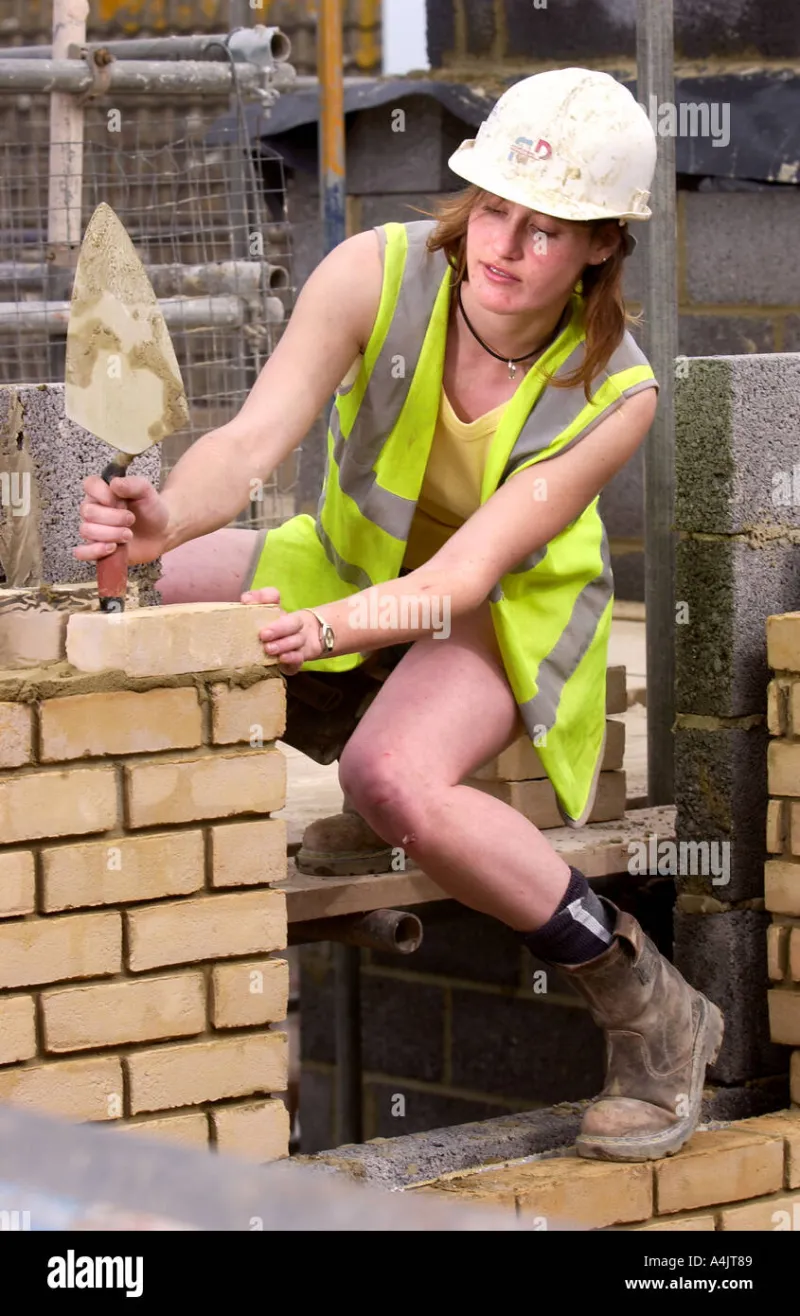
Photo: female bricklayer working on UK construction site, via c8.alamy.com
The construction industry has spent years lamenting its labour shortage, yet the pool of talent it has largely overlooked has been standing in plain sight. Women make up roughly 15% of the construction workforce, but fewer than 2% of tradespeople on the tools. That gap is starting to narrow — not through national campaigns or glossy recruitment drives, but through women in their thirties making calculated, deliberate career changes, and small firms pragmatic enough to give them the chance.
ProBuilder Contractors Network followed three of them: a hairdresser now laying brick, an office manager who plasters, and a former retail supervisor wiring homes. Their paths differ, but the pattern is strikingly similar.
What Pushed Them Off the Old Path
For most, the trigger was a mix of money and monotony. Rachel, 34, spent a decade behind a salon chair in Leeds before enrolling on a bricklaying diploma. "The ceiling was right there in front of me," she says. "I could see my next twenty years and they all looked the same. A mate's dad needed a labourer for a fortnight and I thought, why not."
Priya, 37, worked in insurance admin in Birmingham before retraining as a plasterer. Her motivation was less romantic: redundancy. "The company moved the role online. I looked at what I could actually earn retraining — not the fantasy version, the real version — and plastering came out ahead. It's a skill you can take anywhere and nobody can offshore it."
The third, Sam, 39, completed her electrical qualifications through an adult apprenticeship after years of managing a shop floor. She puts it plainly: "I wanted a trade I could still be earning from at sixty. Retail wasn't going to give me that."
What Nearly Kept Them Out
If the push factors are clear, so are the barriers — and they are rarely about physical strength, the objection most often raised by sceptics.
The first is confidence in unfamiliar spaces. "Walking into a merchant for the first time was worse than walking into the classroom," Rachel admits. "Everyone seemed to know exactly what they wanted. I was googling part numbers in the car park." All three describe the first six months as a test of nerve rather than skill.
The second is the apprenticeship wage. A 35-year-old with a mortgage cannot easily live on apprentice rates, and few colleges or employers explain that adult routes — such as Level 2 diplomas followed by on-site experience — exist as an alternative. Priya funded her retraining through savings and a part-time job, a route she describes as "doable but invisible. Nobody tells you it's an option."
The third is simple visibility. None of the three had met a female tradesperson before starting. "You can't be what you can't see," as Sam puts it.
Do Taster Days Actually Work?
Free "Intro to Trade" taster days have proliferated across colleges in the past three years, and opinion on them is more favourable than the cynics might expect. The format — a day of basic bricklaying, plastering or wiring exercises at a local college — does two useful things. First, it removes the guesswork: candidates discover within hours whether the work suits their temperament, before committing to a year of study. Second, it introduces them to instructors and local builders who, in several cases, have become first employers.
Rachel attended a taster day in Leeds in early 2023. "I was terrible at it," she laughs. "But the tutor said, you'll be fine — you turned up, you listened, you asked questions. That was the first time anyone in education had told me I was employable."
The limitation is follow-through. Taster days generate interest; converting that interest into placements requires colleges and firms to maintain contact lists, and not all do. The women who succeeded were, in every case, the ones who chased the next step themselves.
The Small-Firm Solution
Interestingly, it is not the national contractors driving this change. It is the two-to-ten-person firms — the backbone of the trade — who have quietly discovered that a mature career-changer is often a better bet than a restless 19-year-old.
The reasoning from site supervisors is consistent: older recruits arrive with soft skills already installed. They can talk to clients, turn up on time, read a job sheet and handle a difficult conversation. A hairdresser has spent years managing clients' expectations; an office manager understands paperwork and scheduling. On a domestic job site, those qualities are worth as much as a fast trowel.
One builder in the West Midlands, who now employs two of the three women featured here in subcontracted roles, is blunt about it: "I wasn't running a diversity programme. I had a hole in the team and she was the best person who applied. That's the whole story."
Is the Image Problem Shifting?
Slowly, and mostly from the ground up. Site culture remains a real obstacle — the casual banter, the assumption of incompetence, the loos. All three women have stories that would depress a HR manager. But they also report that competence closes gaps faster than anything else. "After the first job where I out-plastered the sceptic," Priya says, "the comments stopped."
What would accelerate the shift? Adult-apprenticeship funding that reflects real living costs, merchants and sites that treat newcomers as customers and colleagues rather than curiosities, and — above all — more women visible on the tools, because each one makes the next one's arrival easier.
The labour shortage will not be solved by waiting for a generation of school leavers who want to lay brick. It will be solved by firms willing to look at the applicants they've been ignoring. As Rachel puts it, midway through a garden wall in Headingley: "They needed hands. I needed a future. It was never more complicated than that."
Names have been changed at the request of those featured.