Twelve Rainy Weeks in Sheffield: The Real Numbers Behind a Re-Roof Through Britain's Wettest Autumn
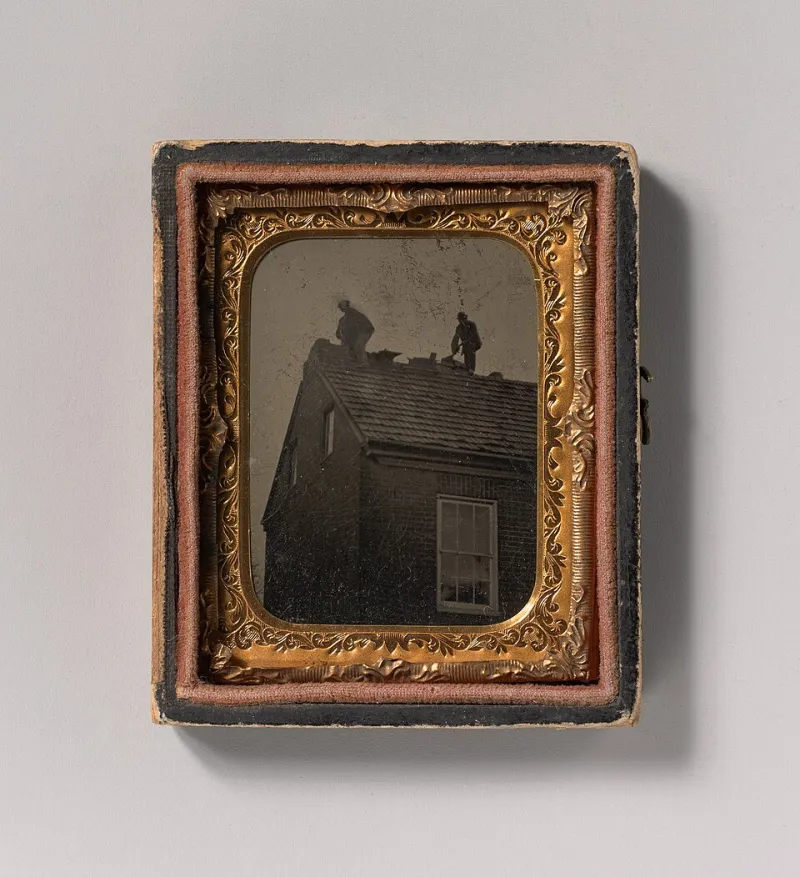
Photo: Unknown authorUnknown author, CC0, via Wikimedia Commons
Case studies in this industry tend to be airbrushed. The scaffolding appears, the tiles go on, the client sends a thank-you card. What follows is not that kind of story.
In September last year, a small roofing contractor based in South Yorkshire — we'll call them Hallam Roofing, at the owner's request a trade name rather than the registered one — won a contract to strip and re-roof a 1930s semi-detached property in the Sheffield suburb of Nether Edge. The existing concrete tiles had failed, with nail sickness widespread and two previous patch repairs of dubious quality. The quote, agreed at £14,800, assumed a six-week programme starting in mid-September.
The Met Office would go on to confirm what anyone on a roof already knew: it was one of the wettest autumns on record for England.
The Programme Falls Apart
Work began on schedule. Scaffolding went up in two days, the strip-down commenced, and by the end of the first week the crew had removed the majority of the old covering and battens.
Then the weather arrived. Of the first eight weeks on site, Hallam's foreman counted eleven full lost days and nine partial days — enough to strip, felt and batten a slope before the rain came, but never enough to complete a section with tiles properly fixed and dry under the cloak. Working on a partially stripped roof in driving rain isn't difficult; it's impossible, and any contractor who claims otherwise is risking the structure below.
The client, to her considerable credit, was kept informed with a weekly written update — a practice the contractor credits with preserving the relationship. "She saw the forecast too," the owner told us. "What she needed wasn't good news. It was knowing we hadn't gone away."
Where the Money Went
The original quote assumed scaffold hire of £1,150 for eight weeks. The job eventually ran twelve weeks on site, with the scaffold extended twice. Final scaffold cost: £2,040 — an overrun of £890.
Labour told a similar story. Partial days were paid as full ones; crews travelled to site, tarped up, waited, went home. Lost-time labour across the contract totalled roughly £1,700 against an allowance of £600.
There were savings, too. A bulk tile purchase negotiated early in the job, and a dry spell in the final fortnight that allowed the ridge and verge work to be completed faster than allowed, clawed back around £540.
The Final Reckoning
Here are the numbers, as supplied to us:
| Item | Quoted | Actual |
|---|---|---|
| Contract value | £14,800 | £14,800 |
| Scaffold hire | £1,150 | £2,040 |
| Labour (incl. lost time) | £6,900 | £8,000 |
| Materials | £4,300 | £3,980 |
| Waste, insurance, overheads | £1,450 | £1,610 |
| Net margin | £1,000 | −£830 |
The job lost money. Not catastrophically — the contractor absorbed it as a bad quarter rather than a threat to the business — but a £1,830 swing on a single domestic contract is a lesson written in red ink.
What Was Learned
Hallam's post-mortem produced four changes that other contractors may find useful:
- Weather contingency in the quote. The company now includes an explicit weather-day allowance of ten per cent on all external contracts, stated in the quotation so the client sees it from the outset.
- Scaffold extension clauses. Rather than absorbing extended hire, the contract now names a weekly rate for overruns beyond the client's control or the contractor's.
- Written weekly client updates as standard. The practice cost an hour a week and, in the owner's words, "is the only reason we still have a client who'd recommend us."
- Earlier starts. Autumn programmes now begin in August, buying margin against the season rather than fighting it.
The Wider Picture
There is a temptation, when a job goes sideways, to keep it quiet. We'd argue the opposite. Every contractor in the UK has watched a forecast destroy a programme; the ones who survive are those who priced for it, communicated through it, and learned from it.
The client, for what it's worth, left a five-star review that mentioned the rain by name and the crew's communication twice. That review, the owner admits, is worth more than the £830 it cost to earn it.