When Nobody Takes the Keys: The Quiet End of Britain's Family Building Firms

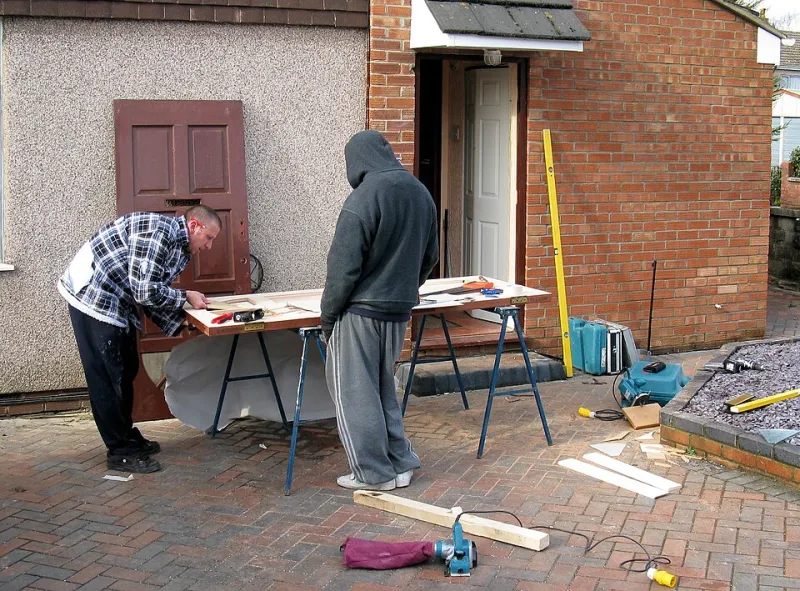
Photo: Unknown authorUnknown author, CC0, via Wikimedia Commons
The sign above the yard gate in Hebden Bridge reads Ramsbottom & Sons, Roofing Contractors, Est. 1874. Within the year, it will likely come down. There are no sons — or daughters — waiting to take the keys, and the firm's managing director, the fourth Ramsbottom to run the business, has begun the slow, painful process of winding down a company that has covered roofs across the Calder Valley for a century and a half.
His story is not an outlier. Across Britain, family building firms that survived two world wars, recessions and the collapse of the building societies are now being dissolved, sold or merged — not because the phone has stopped ringing, but because nobody in the next generation wants to answer it.
A Century and a Half, Undone in a Boardroom
The Yorkshire roofer's reasons are practical rather than sentimental. Inheritance tax on the yard, the plant and the goodwill could force his heirs to sell assets simply to settle the bill. Training an apprentice now costs a small firm the better part of £20,000 across four years, with no guarantee the young person stays. And the administrative load — CITB returns, HMRC's Making Tax Digital, CDM paperwork, insurance renewals — falls on the same pair of shoulders that used to carry only a slate hammer.
"My grandfather worked the roof and did the books on a Sunday night," he says. "I work the roof, do the books, chase the payments and fill in the risk assessments. There isn't much left over to persuade anyone that this is a life."
The Fifth Generation That Chose Otherwise
Four hours away, a Welsh plastering business is on its fifth generation — and its last. The current proprietor's daughter is a radiographer in Cardiff. His son works in software. Neither expresses regret, and he is careful not to guilt them into it.
"You spend your life telling your kids to get qualifications and work somewhere warm," he laughs. "Then you wonder why they don't want the ladders."
What is striking in conversation is the absence of bitterness. The trade paid for the house, the holidays and the pension. But the calculus has shifted. A PAYE salary with a laptop and a quiet office now competes directly with early starts, weather risk and the personal liability that comes with a company name on the side of a van.
Sold, Not Failed
The third firm in this picture never made it to a sixth decade, let alone a sixth generation. A London refurbishment contractor, founded in the 1960s by a Sicilian immigrant with a barrow and a hod, was sold last spring to a regional contractor looking to expand its domestic portfolio. The founder's son — a capable site manager in his own right — negotiated the sale himself.
"I could have run it for another ten years," he says. "But run it into what? The buyers wanted the contracts and the name. The name lasted about eight months on the letterhead."
His point cuts deep. When family firms are acquired, what the buyer usually wants is the order book, not the lineage. The relationships built over fifty years — the merchant credit, the trusted subcontractors, the elderly clients who wouldn't let anyone else near their roof — rarely survive the transition.
What Replaces the Family Firm
If the multi-generation contractor is fading, something is filling the gap. In most towns, that something is one of three things: the limited company with no family dimension at all, the franchise operation, or the regional contractor absorbing local names one acquisition at a time.
Each brings efficiency. None brings the same roots. A family firm that expects to hand over to the next generation plans in decades — it maintains its reputation because its name depends on it. A corporate entity plans in quarters, and its reputation is underwritten by a brand, not a surname.
There are exceptions, of course. Some firms have sidestepped succession by widening it — bringing in a long-serving site manager or office manager as a partner rather than blood. Others have converted to employee ownership, a route the trade has been slow to take up but which preserves local identity and keeps profits in the town.
What the Trade Should Take From It
The lesson for the wider industry is uncomfortable. Family firms were, for generations, the informal apprenticeship system of British building — the place where a teenager learned not just how to lay a brick, but how to price a job, treat a client and stand behind the work. As they disappear, that knowledge has nowhere to live.
If the trade wants to keep anything resembling the Ramsbottom model, it will need policy that reflects reality: inheritance reliefs that actually protect trading assets, apprenticeship funding that doesn't bankrupt a two-man firm, and procurement frameworks that give the small, rooted contractor a fighting chance against the regional heavyweights.
Otherwise, the yard gate in Hebden Bridge is a preview. One by one, the names on the vans will change — and with them, something older and harder to measure than turnover will quietly leave the trade.