When the Quote Clock Runs Out: Pricing Timber in a Market That Won't Sit Still

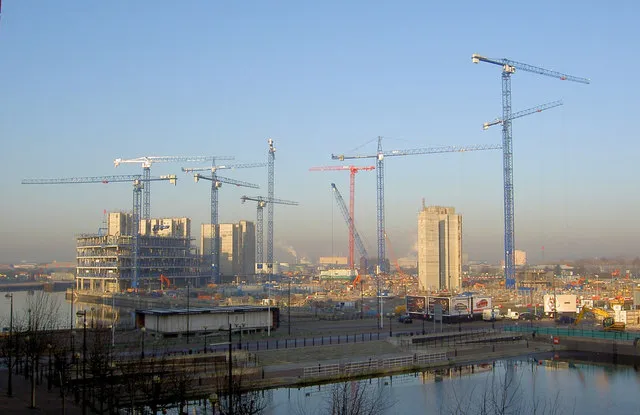
Photo: Diliff, CC BY-SA 3.0, via Wikimedia Commons
A builder in Leeds spent a February week pricing a loft conversion, sent the quotation out on the Friday, and got the call to proceed six weeks later. In between, sheet material had climbed 11% and roof battens followed. The job went ahead. The profit did not.
Scenarios like this play out on sites across Britain every week, and they expose a structural weakness in how much of the domestic building trade prices work: a quote is a promise made against prices that have no obligation to hold still.
The Six-Week Window Nobody Prices For
Most residential clients assume a quotation is a fixed commitment. Many builders, keen to win the work, let them carry on believing it. The result is that the contractor absorbs every movement in the merchant's price list between acceptance and day one on site — a window that, on a typical domestic extension, stretches from four weeks to three months once drawings, approvals and the client's own schedule are factored in.
Timber is the sharpest edge of the problem. It is a globally traded commodity, exposed to shipping rates, currency swings and mill capacity, and it routinely represents a third or more of the material spend on a framing-heavy job. A 10% move in the wrong direction on a £40,000 materials package is a £4,000 hole — often the entire projected profit on the project.
What the Better-Run Firms Are Doing
The contractors who have stopped getting caught tend to have three things in common.
Quotation validity periods, stated plainly. Rather than burying it in small print, they state on the face of the quote: prices held for 30 days, after which a re-cost is available on request. Framed as a service — an up-to-date price rather than a stale one — clients rarely object. Framed as a threat, they do.
Fluctuation clauses on longer leads. For jobs starting more than eight weeks out, some firms now include a simple mechanism: material costs are invoiced at merchant prices at the time of supply, with the labour and overhead element fixed. It is a cost-plus hybrid, and it needs careful explanation, but clients who understand what they are signing are far less likely to feel cheated later.
Merchant relationships that work both ways. Builders with genuine account history at their local merchants' branches report getting advance warning of price rises, the ability to lock in stock at quoted rates, and flexibility on deliveries. In a volatile market, that relationship is worth more than any clause.
The Awkward Conversation, Handled Properly
There is no clause that fully replaces a straight conversation. The builders who manage mid-quote price rises without losing clients tend to do three things: they raise the issue the moment they see it, not at the point of invoice; they show the evidence — a merchant printout carries more weight than an assertion; and they offer options rather than demands, whether that is a re-cost, a phased material order, or a specification swap that achieves the same result for less exposure.
Clients respect honesty about risk far more than they respect a silent absorption of losses followed, in the worst cases, by a builder who cannot finish the job. A margin squeezed to nothing is not a heroic sacrifice. It is a failure of pricing discipline that eventually costs the client too.
A Trade-Wide Habit Worth Building
None of this is glamorous. Validity periods, transparent clauses and early phone calls will never be as marketable as a flawless brickwork detail. But material volatility is not a passing phase — it is the operating environment, and the firms that price for it will still be here to quote the next job when cheaper competitors have gone quiet.
The lesson, as ever in the building trade: the cheapest quote is only cheap until the timber goes up.