Paving Over the Parking: How Podium Schemes Became the Small Firm's First Big Break
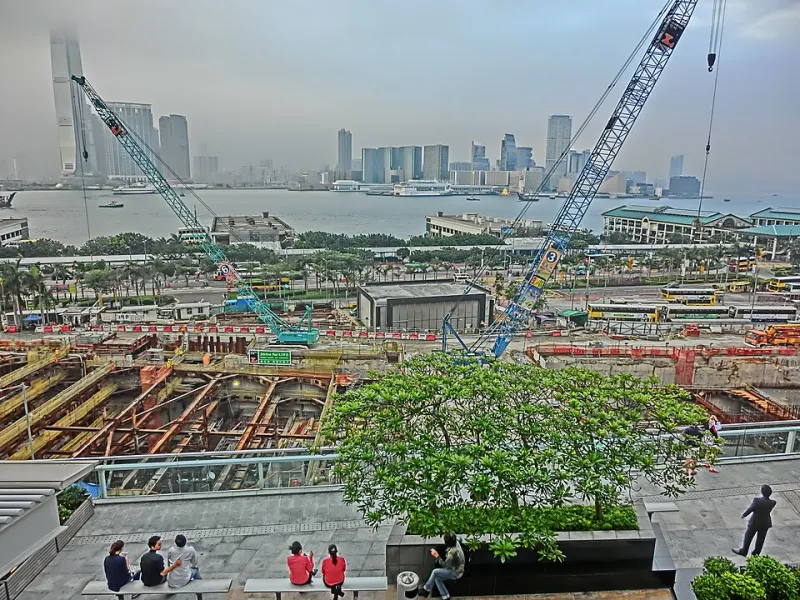
Photo: Fomukimai, CC BY-SA 3.0, via Wikimedia Commons
For thirty years, the surface car park off Station Road in Leamington Spa was where Mark Ellison's vans started the day. This spring, his firm broke ground on a 42-home development built directly on top of it. "First job I ever priced from that car park was a shop refit in 2004," he says. "Now we're putting a structural slab where the ticket machines used to be."
Ellison's experience is increasingly common. As councils across Britain sell off town-centre surface parking to meet housing targets, the podium deck — a concrete platform carrying homes above commercial space or retained parking below — has become one of the most significant sources of work for regional contractors. And for many small firms, it is the first time they have been handed a contract of this engineering complexity.
From Tarmac to Transfer Deck
A podium scheme is, at its simplest, a transfer structure: loads from the residential floors above are spread through a deck into columns and basement walls below. In practice, it is anything but simple. Services must be coordinated before the slab is poured because retrofits are prohibitively expensive. Movement joints, waterproofing at the deck level, and loading from plant and landscaped areas all demand early decisions that a small firm used to traditional build-ups may not have encountered before.
"The tender is where you win or lose it," says Priya Raval, commercial director at a Leicester contractor that delivered its first podium scheme last year. "On a housing estate, if you get the sequencing slightly wrong, you recover. On a podium, the deck programme is the whole programme. Everything underneath has to be complete before the level above can start in earnest."
Both firms describe the same steep learning curve: engaging a temporary works engineer earlier than instinct suggested, insisting on clash detection before the reinforcement packages were ordered, and budgeting honestly for concrete tolerances rather than hoping the frame contractor would absorb them.
The Tender That Changed the Firm
For Ellison's company, a twelve-strong firm based in Warwickshire, winning the Leamington job required more than pricing. The developer's framework demanded a documented temporary works procedure, a designated temporary works coordinator, and evidence of prior structural concrete experience — none of which the firm formally held.
"We spent about four months and £9,000 getting our systems to the standard the pre-qualification required," Ellison says. "Certificates, method statements, a proper temporary works policy. It felt like overkill at the time. It isn't. It's the entry fee now."
Raval's advice to firms eyeing similar work is blunter: don't tender a podium on the strength of a good estimator. "If you haven't done transfer structures, partner with someone who has, even if it costs you margin on the first job. The claims that follow a botched deck will cost you the business."
The Practical Headaches Nobody Tenders For
Away from the drawings, both firms point to problems that rarely appear in the bill of quantities. Deliveries to a confined town-centre site — the very constraint that makes podium land viable — mean timed concrete pours negotiated around ring roads and school runs. Neighbouring traders, having lost their customers' parking, become vocal stakeholders whose complaints can slow inspections. And the question of where a workforce of thirty actually parks, on a site that has just deleted sixty public spaces, is one the firms say councils have been slow to answer.
"We ended up hiring a park-and-ride field at £400 a week and laying matting," Ellison says. "Nobody warns you that the car park you're building on was also your workforce's car park."
Where the Trade Goes Next
Both directors see podium work as a growth market rather than a one-off. Council land disposals, the pressure on brownfield-first planning, and the economics of building homes above retained retail or parking all point the same way. The firms that invested in the competence to deliver decks — temporary works knowledge, concrete frame experience, disciplined procurement — expect to be first in line as more tarmac comes up for sale.
There is, though, a note of reflection beneath the commercial optimism. The car park was unloved, but it was infrastructure. As Britain builds over its surface parking, the trade that used to meet there each morning is finding that the skill to replace it is also the price of staying in the game.
"It's the most technical job we've done and the proudest," says Ellison. "Though I'll admit it's strange setting up the site office where I used to park the Transit."